
Lighting design: the right light in every room of the house
Understand the difference between construction lighting and a lighting design project: layers of light, color temperature and scenes that enhance every room of the house.
A lighting design is the study that defines where, how and with what type of light each space in the house will be illuminated. It's not the same as construction wiring, that point in the center of the ceiling the electrician leaves ready to take any bulb. The difference shows up in daily life: layers of light, color temperature suited to each use, and scenes that change with the time of day. In more than 35 years building high-end homes in Criciúma, we've learned that few things change the perception of a finished house as much as light. Here we explain what sets one apart from the other and at what point this design needs to enter the schedule.
Construction-grade lighting doesn't brighten anyone's life
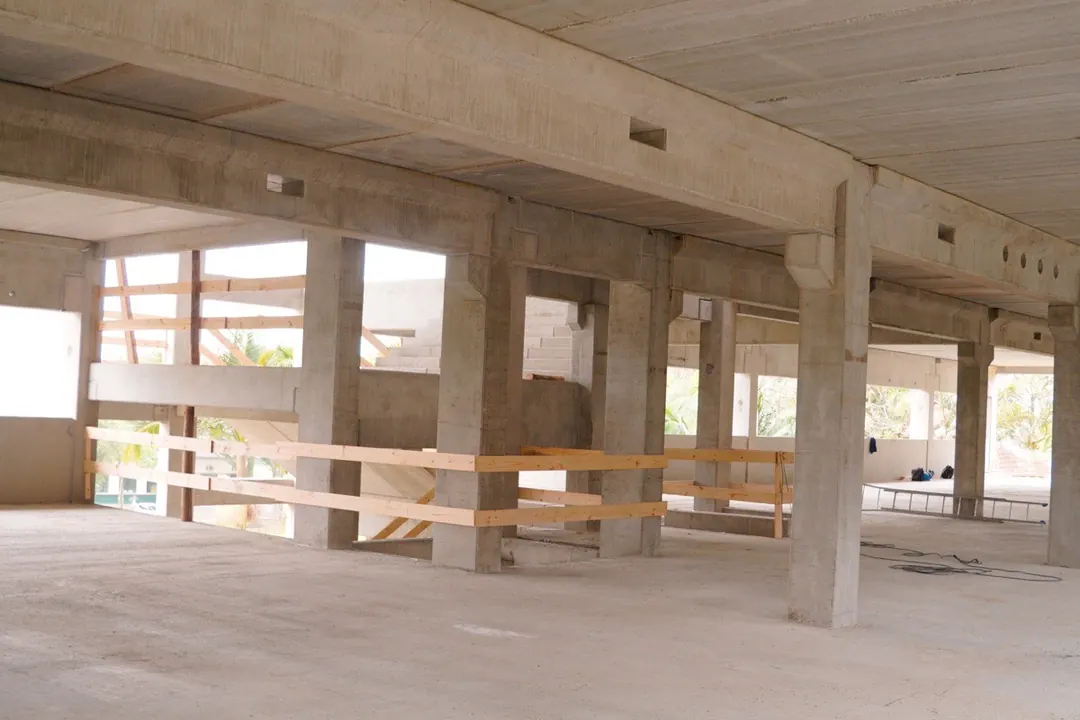
Construction lighting solves just one problem: lighting up the space. One central point per room, one switch at the entrance and that is it. It works for painting walls and cleaning the floor at delivery, but it was not designed for whoever is going to live there.
We know the result well. A living room with light too harsh to watch a film, a kitchen countertop in the shadow of the cook's own body, a bathroom mirror that leaves the face in the dark. The house is good, the finish is good, but the lighting treats the bedroom and the garage the same way.
The lighting design starts from a different question: what happens in each space, at what time and with what mood. From there, it defines the type of fixture, position, beam, power and color temperature. It's a real design, with a floor plan and detailing, not a matter of picking a chandelier at the end of the project.
The layers of light that bring the space to life
A well-lit space almost never relies on a single source. The foundation of a lighting design is working with layers, each with a function, which can be turned on together or separately depending on the moment.
In practice, a living room can have general lighting for receiving guests, wall sconces or LED strips for the late evening, and a directed spotlight on the painting or the shelf. It's the combination of these layers that lets the same space serve for a Sunday lunch and for a movie with the lights down.
- General lighting: illuminates the whole space, the everyday baseline
- Task lighting: directed at an activity, such as a countertop, desk and mirror
- Accent light: highlights an element, such as a painting, wall texture or plant
Color temperature changes the mood of the house
Color temperature is what separates the warm, cozy yellowish light from the white light of a workspace. It is measured in kelvin: around 2700 K the light is warm, good for the living room, bedroom and balcony. Near 4000 K the light becomes more neutral and white, better for the kitchen, laundry room and office.
The most common mistake we see is the entire house on a single color temperature. A bedroom with cool white light looks like a doctor's office, and a work counter with light that is too warm strains the eyes. The lighting design defines this room by room, and sometimes point by point within the same room.
This care ties in with the design of the house as a whole, including the natural lighting. A space that gets plenty of sun calls for artificial lighting that complements that brightness at the end of the day, without competing with it.
Scenes and automation: light that follows your routine
With the layers defined, you can take a step further and create scenes: combinations of lights triggered all at once. Dinner scene, cinema scene, arriving-home scene. Instead of switching on and off one switch at a time, a single command adjusts everything together.
This integrates with home automation, with control via panel, phone or voice, and features like dimming, which regulates the intensity of the light. But note: scenes and automation depend on infrastructure, cabling and circuits planned in advance. Installing later, with the house finished, almost always means breaking walls and redoing the ceiling.
Good lighting enhances texture and finish
A high-end finish deserves lighting to match. An exposed concrete wall, a wood panel, or a special porcelain tile change completely when they receive grazing light, the kind that skims across the surface and reveals the material's texture. With the wrong light, the same finish looks flat and dull.
In the projects we build, this meeting between material and light is one of the most beautiful moments of the handover. There is no point in investing in high-end finishes if the lighting flattens everything. The lighting design exists precisely so that each hand-picked texture shows as it should.
When the lighting design enters the schedule
The right moment is together with the other complementary designs, before the project begins. Each light point becomes conduit in the slab, a box in the masonry and a circuit in the electrical panel. Defined early, all of this is executed just once, without rework and without joints appearing on the ceiling.
That's why EZA works with design coordination and VR visualization with the client: you can see every detail before executing, anticipate decisions and move forward with more confidence. A light fixture that conflicts with a beam, a cove ceiling that doesn't fit with the air conditioning, all of this shows up on the computer, not on the site.
In the end, the math is simple. Planning the lighting on paper costs a fraction of what it costs to tear things up later. And the result stays with the family for the whole time the house is lived in.
Basic wiring lights up the house. A lighting design makes the house come alive, with the right light for every moment, from breakfast to a movie late at night. And, as with almost everything in a well-built project, the difference is decided during planning, before the first conduit is laid into the slab. If you are designing or building your house in Criciúma and the surrounding region and want to think about lighting from the very start, message EZA on WhatsApp (48) 99191-2018, write to [email protected] or explore our projects at eza.com.br. We help put every light in the right place.
Frequently asked questions
Do I need a lighting design even in a smaller house?
The size of the house matters less than the way the family lives in it. Even in a compact home, defining layers of light and the right color temperature changes the comfort of every room. What varies is the complexity of the project, not the need to think about the lighting before closing up walls and ceilings.
Does a lighting design make the project much more expensive?
The cost varies with the size of the house and the desired level of automation, so there is no fixed figure without assessing the project. What experience shows is that planning the lighting in advance is far cheaper than adapting later, when any change involves breaking walls, redoing the ceiling and reworking the electrical panel.
What is the difference between warm light and cool light in practice?
Warm light, around 2700 K, has a yellowish tone and creates a cozy atmosphere, ideal for the living room, bedroom and balcony. Cooler or neutral light, near 4000 K, is white and favors attention and precision, good for the kitchen, office and laundry area. The design sets the right temperature for each space, and often combines the two in the same house.
Want to build your high-end house in Criciúma?
EZA Engenharia takes care of your project from start to handover, since 1991.
Chat on WhatsApp Request a quote