
Technology in construction: what has changed in project practice
3D designs, VR, drones and digital maintenance management: what technology has really changed in civil construction, in the view of those with 35 years on the job.
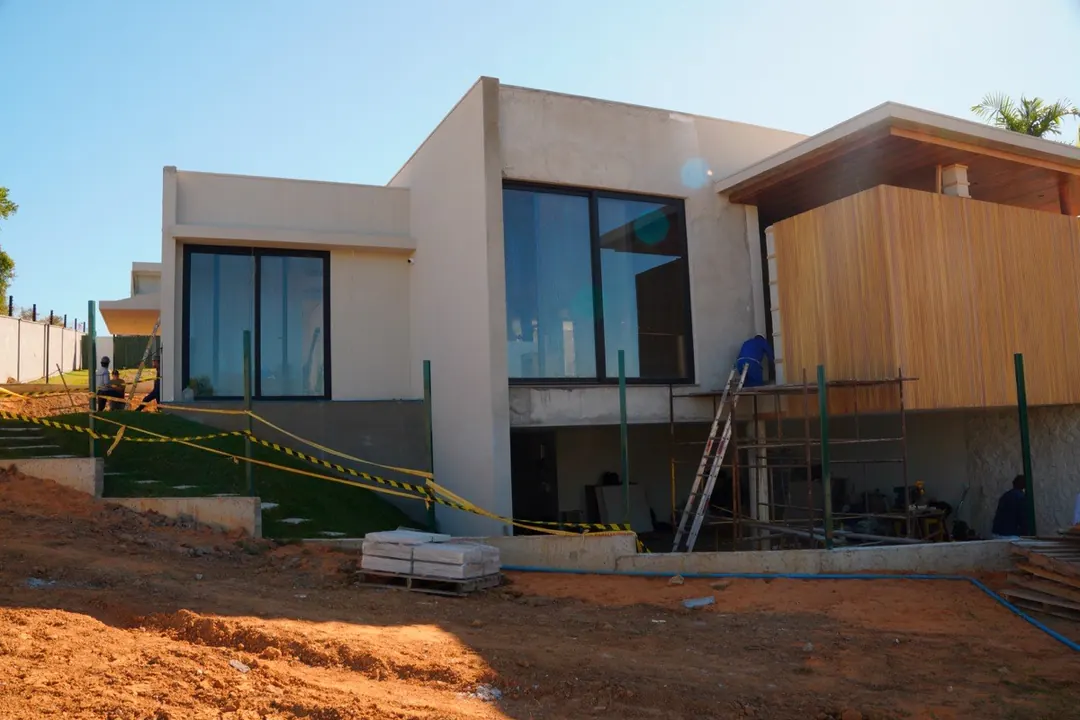
A lot has changed. In more than 35 years on the job site, we have seen the project go from a roll of paper to a 3D model, the client start following the project on their phone and home maintenance gain a digital platform. In this article, we tell what technology in construction has changed in practice, what EZA uses day to day in Criciúma and what still depends on good old planning.
From tracing paper to 3D and VR design
Anyone who built a house in the 90s remembers: the design was a roll of paper under the arm, and the client had to imagine the rest. Today the design is born in 3D, and that changed the conversation. You can see the ceiling height, the light entering the living room, the height of the countertop, all before laying the first brick.
At EZA, we went a step further and use VR visualization with the client. With the headset, the person walks inside the house that does not yet exist. Combined with the coordination of the projects (architectural, structural, electrical and plumbing checked against one another), this visualization helps the client understand every detail better, anticipate decisions and move forward with more confidence.
This reduces one of the biggest invisible costs of a project: the late change of mind. A decision made in the model costs almost nothing. The same decision made with the wall already plastered costs demolition. If you want to understand how everything ties together before execution, we wrote about the high-end house architectural design.
Drones and photos: the project monitored from afar
Another visible change is the documentation of the project. The drone has become a common tool in the sector for photographing the roof, the facade, and the layout on the plot, things that once required scaffolding or a lot of imagination. And the progress photo, organized by stage, has become routine on a well-run site.
For the client, the practical effect is simple: you can follow the home's progress from your phone, without depending on an in-person visit every week. A message with the construction company, a dated photo, a question answered right away. Constant alignment has become much easier to maintain.
A warning from someone who has seen this go wrong: a pretty photo does not replace management. Technology only helps when there is a process behind it.
What technology in civil construction has changed in site management
Schedule management has gone digital. On our projects, the team holds alignment meetings right on the job site, sets schedules, and assesses the work fronts before opening a new phase. The tool records, but the ones who decide are people looking at the project up close.
Technology has also reached construction systems. In 2026, we trained our team on a new scaffolding shoring system with a drop head, which brought more precision, organization, productivity and safety. In structures that demand higher performance, we use post-tensioning, with tensioned cables that provide greater strength and durability, and concrete pouring always supervised by an engineer.
Ultimately, the tool changes and the logic does not: an organized project does not depend on luck, it depends on planning. We talk about this in detail in the text about high-end project management.
- Schedule and work fronts reviewed in an on-site meeting
- Checking each stage before releasing the next one
- Tests that verify the stage, such as the watertightness test, before closing everything up
Innovation is also sought beyond the construction site
There are things you cannot learn within your own walls. That is why EZA takes part in industry fairs and events, such as ConstruSummit, focused on innovation and technology for construction, ConstruSul, and FEICON. It is where we see what is coming in materials, equipment, and software before deciding what makes sense to bring to the site.
In 2025, this culture delivered a concrete result: our engineering team took 1st place at the InovAscea Hackathon, promoted by ASCEA. For a construction company with more than 35 years on the road, winning an innovation marathon says a lot about how the team views technology: it's not a fad, it's a work tool.
After the keys: maintenance with digital management
Perhaps the quietest change is in the post-construction stage. In the past, the relationship with the construction company ended when the keys were handed over. At EZA, it continues through EZA Care, our post-construction division, which doesn't just wait for a call: it offers preventive maintenance, contracted separately, so the house ages well.
And the client receives a digital maintenance management tool, Easy Alert, a platform that organizes the home's maintenance and service requests in one place. Instead of warranty paperwork lost in a drawer, the residence's history is recorded and tracked.
This care begins during execution itself, with checks such as the watertightness test that we do on our projects. A high-end house is built to last for decades, and lasting well requires oversight.
Technology has changed the way we design, monitor, and maintain a house, but it has not changed the fundamental: a good project comes from planning, a qualified team, and attention to detail. A new tool in the hands of someone without a process only produces mistakes faster. If you are thinking about building and want to see up close how 3D design, VR, and digital management work on a real project, reach out to EZA on WhatsApp (48) 99191-2018, send an email to [email protected], or check out our projects at eza.com.br.
Frequently asked questions
Does using technology on-site make construction more expensive?
In practice, it is the opposite. Design coordination and a 3D model cost a fraction of what it costs to redo a demolished wall or a pipe that hit a beam. What makes the project more expensive is discovering a problem too late.
What is VR visualization of a house project?
It means walking inside the 3D model of the house using virtual reality goggles, before the work begins. The client perceives scale, heights and the layout of the spaces in a way that the paper floor plan doesn't show. EZA uses this resource with clients to anticipate design decisions and avoid expensive changes during execution.
How does digital maintenance management work after delivery?
At EZA, the client receives Easy Alert, a digital platform that organizes the home's maintenance and service requests. EZA Care, our post-construction division, also offers preventive maintenance, contracted separately. This way the house stays looked after even after the keys are handed over.
Want to build your high-end house in Criciúma?
EZA Engenharia takes care of your project from start to handover, since 1991.
Chat on WhatsApp Request a quote