
Waterproofing and watertightness testing: the invisible stage that protects your house
Learn what the watertightness test is, where waterproofing comes into the project and why skipping this stage is costly, with the experience of EZA Engenharia.
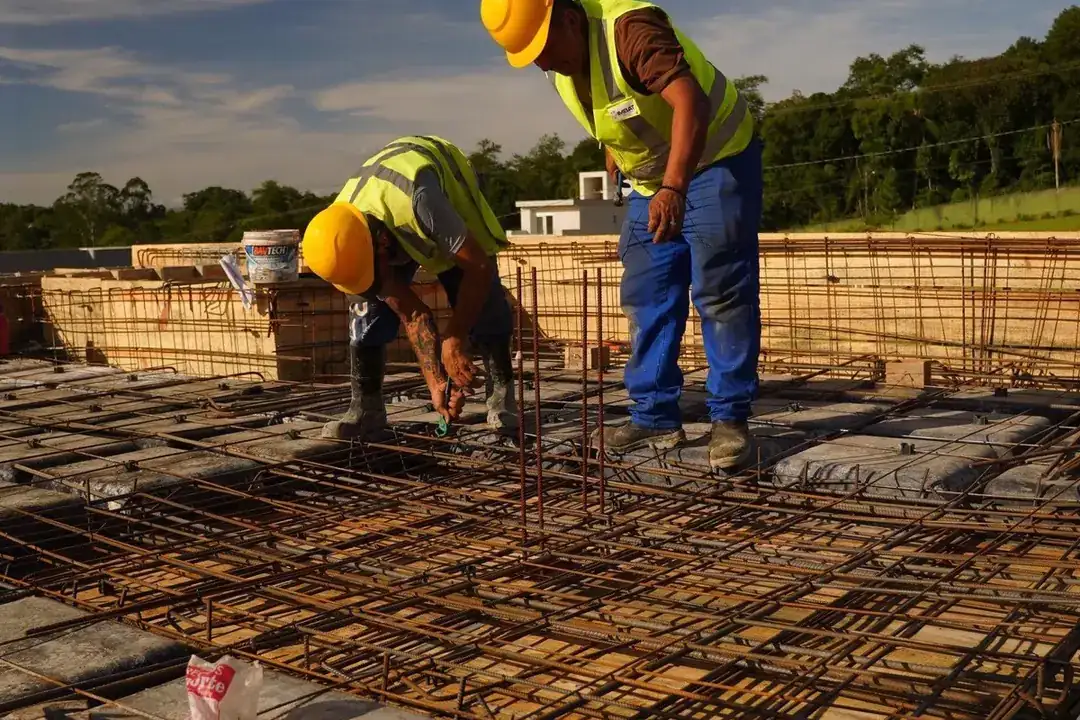
Waterproofing is one of those stages of the work that no one sees in the finished house, but that decide whether it will age well or turn into a headache. This piece was born from a video we published on EZA's Instagram, showing a water-tightness test underway on one of our projects. In the caption, we sum up our philosophy: on site it is easy to skip a step because of deadline or cost, but that is exactly where problems begin down the road. After more than 35 years building in Criciúma and the region, EZA Engenharia has learned that the difference between a good house and an excellent house lies in what no one sees. In this article I explain what waterproofing is, how the water-tightness test works and why this step deserves your respect.
What waterproofing is and why you don't see it in the finished house
Waterproofing means creating barriers that keep water from reaching where it shouldn't: the structure, the walls, the interior spaces. When the house is finished, all of that disappears beneath the subfloor, the cladding and the paint. That's why many people only find out that waterproofing existed, or didn't, years later, when the first stain appears on the ceiling.
In a well-run construction, waterproofing is treated as a design item, not as a patch. Each area receives the system suited to its use, applied at the right moment in the schedule, before being covered by the following layers. The areas that typically require this care are:
- Roof slabs and terraces exposed to rain and sun
- Bathrooms, kitchens, laundry rooms and other wet areas
- Balconies, planters and gardens over slabs
- Pools, water mirrors and reservoirs
- Foundations, footing beams and walls in contact with the ground
How the water-tightness test works
The watertightness test is the real proof that the waterproofing works. The procedure, in general terms, is this: drains and outlets are sealed, a layer of water is formed over the waterproofed area and it is kept under observation for a few days. If the level holds and nothing seeps through the other side, the barrier is doing its job. If any sign of water passing through appears, it is time to fix it now, while fixing it is simple and cheap.
This is exactly the process we showed in the Instagram video that gave rise to this article: seal everything, wait, monitor. It takes time and holds up the start of the next stage, but it ensures the waterproofing is truly working before it gets covered. Once the flooring is laid, no one can check this with the naked eye anymore.
The price of skipping this step
Water infiltration is a silent problem. It starts small, hidden, and works against the house every day until it announces itself in the worst way. The most common damage from poorly done or nonexistent waterproofing includes:
And there is the cost of the correction. To resolve seepage in a wet area, it is often necessary to break new flooring and cladding to redo what should have been done during construction. It is not uncommon for a high-end expansion in Criciúma start exactly like this: undoing a leak problem that would have cost a fraction of that if it had been dealt with at the right time.
- Stains, mildew and mold on ceilings and walls
- Detachment of floors, cladding and paint
- Corrosion of the concrete reinforcement, a serious structural problem
- Damage to built-in cabinetry, lighting and automation
Why high-end houses require extra attention
The more sophisticated the design, the more critical waterproofing points it tends to have. Flat roofs, large terraces, a spa, a pool, a garden over a slab and a climate-controlled wine cellar are wonderful features to live with, and they all involve water or contact with the soil in some way. Add to that the climate of southern Santa Catarina, with rain well distributed throughout the year and high humidity, and it becomes clear why this subject is taken so seriously around here.
That is why at construction of high-end houses in Criciúma the waterproofing system needs to be defined together with the design, coordinated with structure, plumbing and finishing. Choosing the wrong system for the type of area, or applying the right system at the wrong time, compromises the result just the same. Design and execution need to go hand in hand.
How EZA Engenharia handles waterproofing
At EZA, waterproofing is not a checklist item to be signed off in a hurry. The stage enters the schedule with the time it needs, including the testing time. As we said in the video: does it hold up progress? It does. But it guarantees that the barrier is truly working before any finish covers the work.
This stance comes from more than 35 years building in Criciúma and the surrounding region. A well-done project is one that remains well done ten, twenty years after handover, and that is decided in the stages the client does not see. If you are planning to build, ask the construction company how it handles these invisible stages. That is where the difference lives.
Waterproofing and watertightness testing do not appear in a magazine photo, but they protect everything that does appear. If you are going to build or expand in Criciúma and the region, choose a construction company that treats the invisible stages of the project with the same care it dedicates to the finishing. EZA Engenharia has worked this way for more than 35 years, following each project from design to handover, with in-house engineering and quality control at every stage. Reach the team on WhatsApp (48) 99191-2018, send an email to [email protected] or go to eza.com.br to see the portfolio and talk about your project.
Frequently asked questions
What is a watertightness test?
It is the test that proves whether a waterproofed area truly holds water. Generally, drains and outlets are sealed, a layer of water is formed over the surface, and it is kept under observation for a few days. If the level holds and no leak appears on the opposite face, the waterproofing is approved and the project can proceed to the following layers.
How long does the watertightness test take?
It depends on the area and the system applied, but it usually involves a few days with the water film under observation, normally around 72 hours. It seems little compared to the total project schedule, and that is precisely why skipping it makes no sense: the time invested here prevents months of trouble after delivery.
Can a house be waterproofed after it is finished?
It can be done, but it is almost always more expensive and more invasive, because it is often necessary to remove finishes to reach the base. There are corrective solutions for finished houses, and this type of service is more common than it seems. The ideal is to solve it during construction, when the cost is lower and the result is more reliable.
Want to build your high-end house in Criciúma?
EZA Engenharia takes care of your project from start to handover, since 1991.
Chat on WhatsApp Request a quote