
How to Follow Your House Project Without Becoming Its Hostage
See how to follow your house project with scheduled visits, reports with photos and decision meetings. A guide by EZA, 35 years on-site in Criciúma.
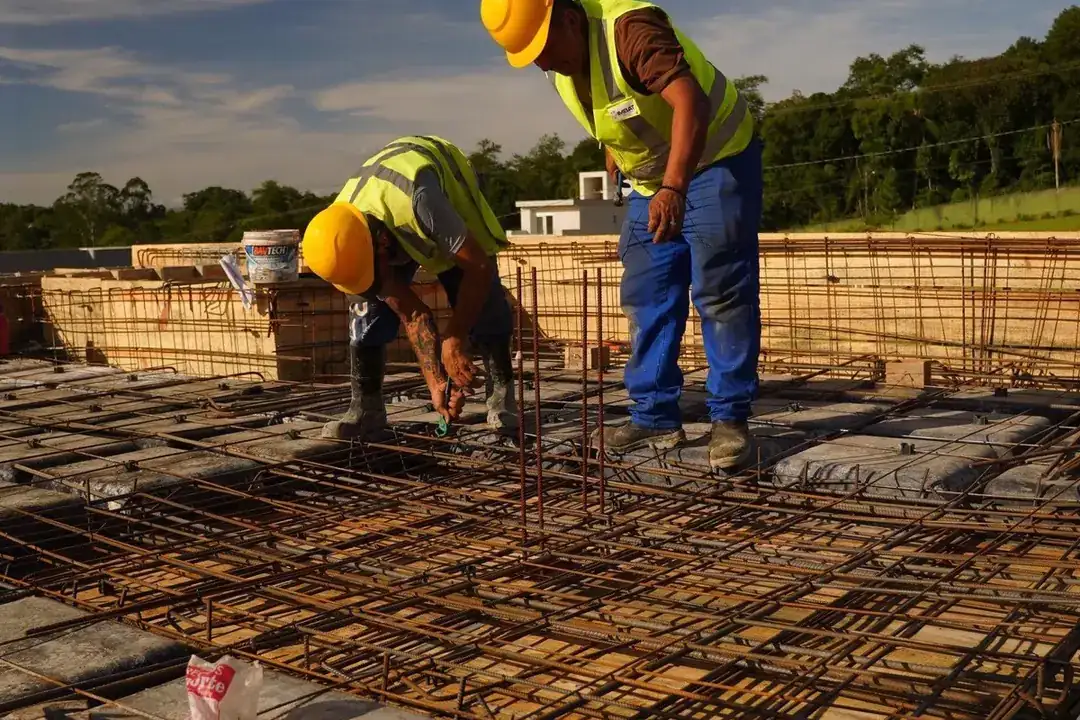
How do you follow your home's construction without turning it into a second job? With an agreed routine: scheduled visits, a report with photos between one visit and the next, and decision meetings at the right moments. Whoever follows a project well isn't the one who shows up at the job site every day, it's the one who knows what to look at and when. In more than 35 years building houses in Criciúma and the region, we've learned that trust between client and construction company is built with transparency, not surveillance. In this text we show the routine that works in practice, from the foundation to the handover of the keys.
Agree on the routine before the project begins
The best time to define how the follow-up will work is before the first pile goes into the ground. Agree with the construction company on the frequency of visits, who your direct contact is and where decisions will be recorded. When this isn't clear, the client shows up at the site at random times, the foreman stops the team to attend to them, and important information gets lost in hallway conversation.
Here at EZA we repeat a phrase that applies to everything in construction: an organized project does not depend on luck, it depends on planning. That includes the follow-up. A single communication channel and a routine defined from the start prevent the biggest source of friction between client and construction company, which is the feeling of not knowing what is happening. We talk more about this organization in the text about high-end project management.
A good visit is a scheduled visit
A construction site is a work environment, with machinery running, suspended loads and people moving around. A scheduled visit means that someone from the technical team receives you, hands over the protective equipment and walks alongside you explaining what is being done. Safety is not a detail, it is a priority.
Some clients believe a surprise visit reveals the truth of the project. In practice, it reveals little. Every project has visually unappealing phases: half-finished plaster, floors covered in protection, walls scribbled with markings. Without someone alongside to explain, what is a normal stage becomes a scare. A well-guided biweekly visit tells you far more than three trips a week up to the gate.
Reports and photos between one visit and the next
Between visits, what sustains the client's peace of mind is the record: a periodic report telling what has been executed, what comes next and whether the schedule is going as agreed, always with photos. This can be followed from your phone, without setting foot on the site.
The most valuable photos are precisely of the things that will end up hidden. Electrical and plumbing runs before the walls are closed, waterproofing before the screed, rebar before the concrete pour. Once the finishes cover everything, that record becomes the house's technical memory. Keep this material, it's worth its weight in gold for future maintenance.
A decision meeting is not a visit
A visit is for seeing. A meeting is for deciding. They are different things, and mixing the two usually goes wrong, because construction decisions have deadlines: cladding, window and door frames, fixtures and sanitary ware need to be defined before the phase arrives, otherwise the schedule stalls or the choice is made in a hurry.
That's why we schedule alignment meetings with a defined agenda, looking at the schedule and the decisions coming up ahead. At EZA, design coordination and VR visualization help with this: the client understands each detail better, anticipates decisions and moves forward with more confidence. Deciding on screen, calmly, is far better than deciding on-site with the mason waiting for an answer.
How to follow your house project at every stage
At EZA the watertightness test is routine: seal everything, wait, monitor. It takes time, but it ensures the waterproofing is truly working before the flooring covers it all. We explain this care in the text about waterproofing and watertightness testing.
Each stage calls for a different eye, and you don't need to be an engineer to follow it well. You need to know what to ask. If you want to understand the complete sequence, we have a text just about the stages of building a high-end house. In short, it works like this:
- Foundation and structure: ask about the structural design and the concrete pours, which at EZA are supervised by an engineer
- Installations: ask for photos of everything before walls and ceilings are closed
- Waterproofing: request the watertightness test before releasing the subfloor
- Finishing: check materials and colors with the design in hand, room by room
- Delivery: walk through the house with a checklist, testing doors, windows, valves and electrical points
Following the construction of your home doesn't have to consume your routine or become a source of anxiety. With scheduled visits, reports with photos and decision meetings at the right time, you stay in control without becoming a hostage. We often say that the project starts long before the keys, and the relationship with the client doesn't end there: at EZA, post-construction keeps looking after the home after delivery. If you're planning to build in Criciúma and the region and want a construction company that works with this transparency, reach out to us on WhatsApp (48) 99191-2018, send an email to [email protected] or explore the projects at eza.com.br.
Frequently asked questions
How often should I visit the construction site of my house?
In practice, a well-guided visit every 15 days works for most projects, with extra meetings at the moments of choosing materials and finishes. More important than frequency is quality: going at a scheduled time and with someone from the technical team explaining what is being done.
Can I show up at the project site without notifying the construction company?
The ideal is always to arrange it in advance, for safety and out of respect for the team's work. A construction site has real risks, and a scheduled visit ensures that you enter with protective equipment and leave with the answers you were looking for. Now, if the construction company makes any visit difficult, that really is a warning sign.
What do I do if I notice something different from the design during the project?
Record it with a photo, note the location and take the issue straight to the responsible engineer, preferably in writing through the agreed channel. Often it is a legitimate technical adjustment that no one communicated properly. When it really is a mistake, the sooner it is pointed out, the simpler and cheaper it is to fix.
Want to build your high-end house in Criciúma?
EZA Engenharia takes care of your project from start to handover, since 1991.
Chat on WhatsApp Request a quote