
Drywall or masonry: where each works best in the house
Drywall or masonry? EZA explains where each system works best in the house: acoustics, moisture, weight fixing and what we use on high-end projects.
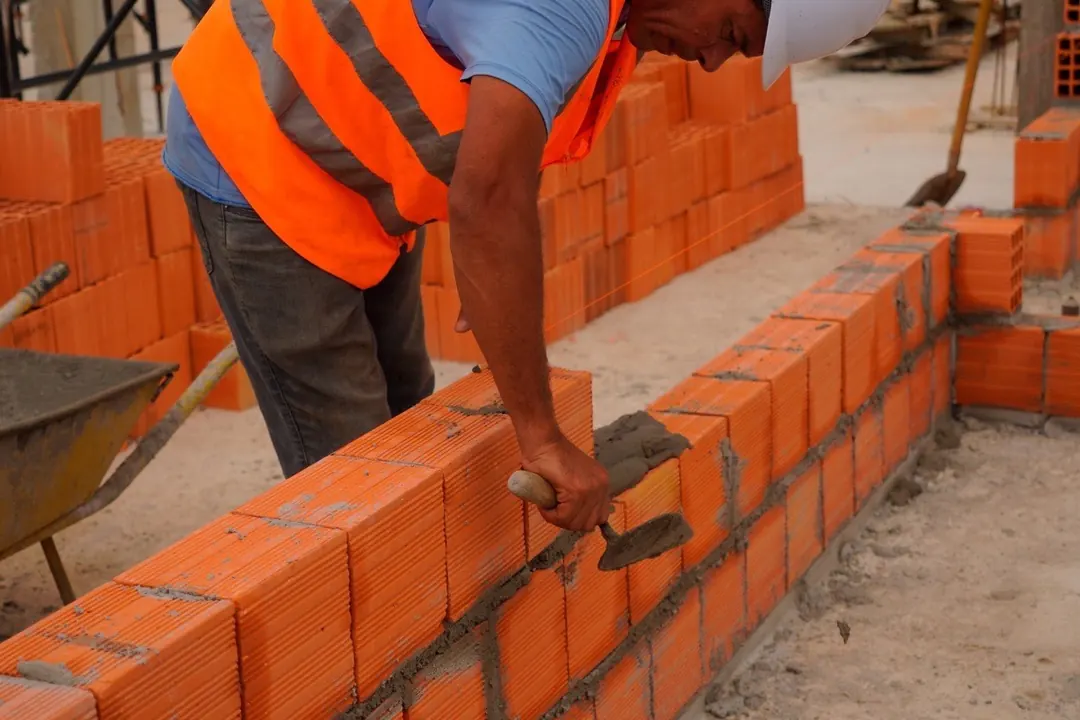
Drywall or masonry? After more than 35 years of building in Criciúma, the answer we give is almost always the same: both, each in the right place. Drywall carries an unfair reputation as a flimsy wall, and masonry carries the reputation of being the only serious option. Neither of these stories is true. In this text we take apart the most common myths about drywall, show where it genuinely wins and where masonry remains the best choice for your home.
What drywall really is
Drywall is a wall system made of plasterboard panels screwed onto a structure of metal profiles. Between one face and the other there is an internal space that holds the insulation and the routing of the installations. It is not ordinary plaster, it is not improvisation and it is not new: hospitals, hotels and commercial buildings have used this system for decades, in Brazil and around the world.
Drywall's bad reputation around here comes, most of the time, from poor installation. The wrong board for the space, an undersized structure, an untreated joint. The system takes the blame for the mistake of whoever installed it. Well designed and well installed, drywall delivers a straight, stable wall with a very good finish.
Acoustics, fastening and moisture: the three myths
The most repeated myth is the one about acoustics. A drywall wall with rock wool or glass wool in the core insulates sound very well, and in many cases outperforms plain masonry with no finish. The secret is in the assembly: board, wool and careful sealing. A hollow wall, with no insulation at all, that's when it becomes a drum. We talk more about this in the article on thermal and acoustic comfort in your house.
The second myth is fixing. You can hang a TV, shelf and cabinet on drywall, as long as you use anchors specific to the system, and not the common anchor for solid masonry walls. For heavier loads, the right approach is to plan internal wood reinforcement or a double panel in the design itself, exactly at the point where the weight will be.
The third is moisture. There is a board specific to wet areas, the so-called green board, used in bathrooms, kitchens and laundry rooms. What you cannot do is put a common board in these spaces, nor skip waterproofing in the areas that receive water. A rule that, by the way, applies equally to masonry.
Where drywall beats masonry
The first advantage is speed. A drywall partition goes up in a few days, with no curing wait, with a cleaner site and almost no debris. In an expansion, this changes everything: less demolition, less dust, less time with the house turned upside down.
The second is lightness. Drywall weighs a fraction of a brick wall, which relieves the structure and makes it easier to create or move walls on upper floors. And because the core is hollow, electrical, plumbing and air-conditioning run through the inside without breaking into a finished wall, which also makes future maintenance much simpler.
- Faster and cleaner construction, with no curing time
- Lower weight, good for expansions and upper floors
- Built-in installations without demolition
- Ceilings, cove moldings and recessed lighting with a smooth finish
Where masonry works better
Facade and exterior wall are masonry territory. It resists impact and weather better, and gives a greater sense of solidity and security across the entire perimeter of the house. The mass of the brick and the finish also helps with thermal behavior, holding back temperature variations between day and night.
Areas that frequently receive direct water, such as pool walls, the barbecue and exposed corners of the leisure area, also call for masonry. The same goes for walls with a structural function and for points of constant impact, such as the garage and the service area. In these places, the strength of brick still makes up for the slower construction.
- Facades and the entire outer perimeter of the house
- Walls with a structural function
- Pool, barbecue and exposed leisure areas
- Garage and service area, where wear is routine
Drywall or masonry: how we decide in practice
In the high-end houses that EZA builds in Criciúma and the surrounding region, the common approach is a mixed system. Masonry on the perimeter, in the more demanding wet areas and where structure is involved. Drywall in the ceilings, coves and internal partitions of dry areas, where it delivers finish and speed without giving up performance.
This decision is born in the design, not on the site. We use design coordination and VR visualization with the client, so every TV outlet, every wall-mounted cabinet and every wall that changes system is defined before construction begins, with the reinforcements planned in the right place. It is the kind of care that avoids the most common mistakes made by those building a house.
And like every material choice, this one also depends on the workmanship. Poorly done drywall cracks at the joints, and poorly done masonry goes out of plumb. The right system, executed wrong, becomes a problem all the same. Anyone who wants to better understand how we think through each choice can also read about high-end construction materials.
In the end, the right question is not which system is better, but which is better for each wall of your house. Drywall and masonry coexist very well in the same project, each doing what it does best: one brings agility, lightness and ease for embedding installations, the other ensures solidity where the house demands it most. If you are planning to build or expand in Criciúma and the region and want a team that decides this with a design, and not on improvisation, reach out to EZA on WhatsApp (48) 99191-2018, send an email to [email protected] or get to know our projects at eza.com.br.
Frequently asked questions
Can drywall hold a TV and a wall-mounted cabinet?
It holds, as long as the fixing uses anchors made for drywall and, for heavier loads, there is internal reinforcement planned inside the wall. That's why it's best to decide, still at the design stage, where TVs, shelves and cabinets will go. Using a standard solid-wall anchor in drywall is the mistake that feeds the reputation of the weak wall.
Can drywall be used in bathrooms and kitchens?
Yes, using the green board, made for wet areas, and keeping the waterproofing in the regions that receive water. In spots with direct and constant water, such as the shower stall, the execution needs to be even more careful. For external or heavily exposed walls, masonry is usually the safer choice.
Does a drywall wall insulate sound less than masonry?
Not necessarily. With rock wool or glass wool at the core and good execution, drywall insulates very well and can outperform plain masonry without cladding. What determines the result is the combination of board, insulation and sealing, not the material on its own.
Want to build your high-end house in Criciúma?
EZA Engenharia takes care of your project from start to handover, since 1991.
Chat on WhatsApp Request a quote