
Precast structure: when it makes sense in your project (and when it doesn't)
Understand when a precast structure makes sense: timeline, factory control and large spans. EZA delivers more than 4,500 m² in precast at SATC.
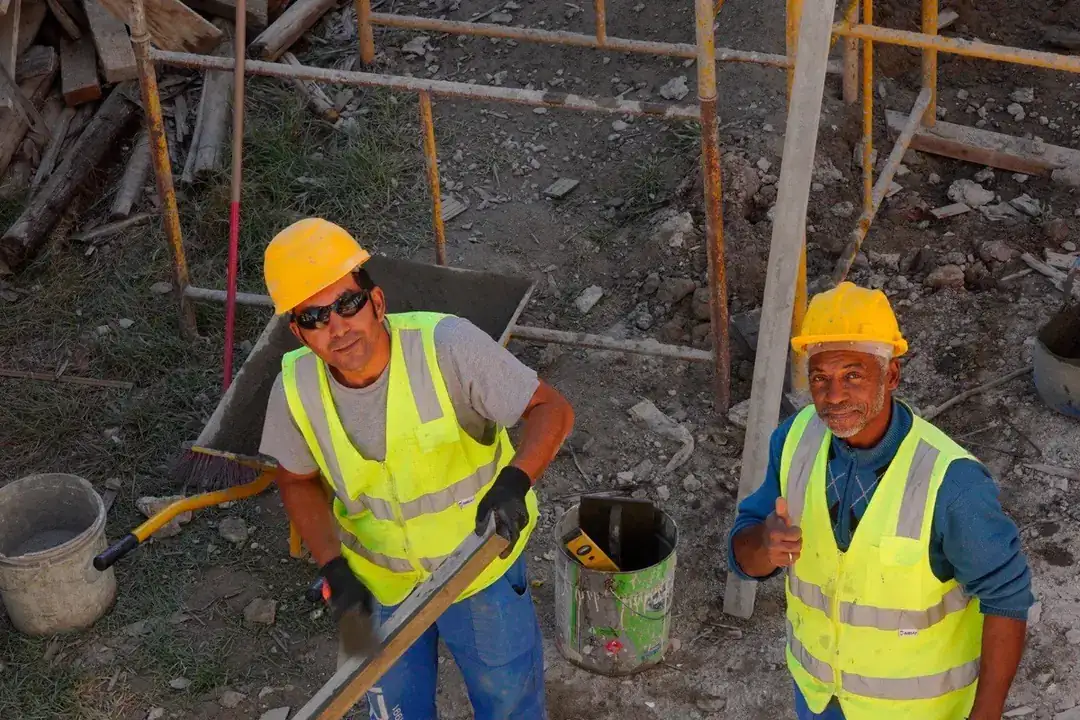
Precast structure makes sense when the project calls for a short deadline, large spans and repetition of elements: warehouses, schools, commercial buildings and institutional blocks. For a high-end house full of unique details, it is almost never the best path. We speak about this from first-hand experience: EZA is building the new university block for SATC, in Criciúma, with approximately 4,500 m² of precast structure across four floors. Here I explain what the system is, where it wins and where it loses.
What a precast structure is
In a precast structure, the parts that support the building (columns, beams, slabs and sometimes cladding panels) are produced away from their final position, in a factory or at a plant set up on site. After curing, they travel by truck to the site and are lifted into place with a crane. The building grows like a large assembly, piece by piece.
In conventional cast-in-place structures, the path is different: you assemble the formwork, place the steel, pour the concrete, and wait for it to cure right there, floor by floor. It works very well, and it is what we use most in made-to-measure residences. But the pace depends on curing time, the weather, and a great deal of carpentry on site.
The advantages that show up on the construction site
The first advantage is the timeline. While the foundation advances on-site, the elements are already being fabricated in parallel. When they arrive, assembly is fast: a floor of structure is erected in days, not in weeks of formwork, concrete pouring and curing.
The second is factory control. Dosed concrete, curing under controlled conditions, metal formwork and a team making the same part many times over. This produces a standard of finish and strength that is hard to replicate on the job site, where rain, heat and logistics interfere all the time.
The third is the ability to span large distances. With prestressed beams and slabs, in which tensioned cables give the element greater strength, you can space out the columns and free up the area. In a supermarket or a warehouse, fewer columns in the way means more freedom of layout.
- Shorter timeline, with fabrication and foundation running in parallel
- Factory-quality parts, less exposed to the weather
- Larger spans and a cleaner site, with less formwork and debris
Where precast usually wins the contest
The system shines on projects with scale and repetition: commercial and logistics warehouses, supermarkets, schools, university blocks, parking structures and commercial buildings with similar floors. The more the structure repeats, the more the factory logic pays off.
Timeline also weighs on the decision. In commercial and institutional projects, each extra month of execution is a month without using that space, so speeding up the structure changes the whole equation. We have already shown how long a commercial project takes, and the structure is one of the stages that most affects this total.
The limits you need to know before deciding
The first limit is flexibility. A precast part comes from a closed design: once it has gone to the factory, changing it is expensive and slow. If the client still wants to adjust the floor plan, ceiling height or facade during the project, the system becomes a straitjacket.
The second is the architecture. A customized high-end house thrives on unique details: cantilevers, curves, varying ceiling heights, junctions of materials. Cast-in-place gives much more freedom for this kind of design. That is why, in made-to-measure residential work, precast usually comes in at most as isolated pieces, not as an entire system.
And then there is logistics. Large elements travel by flatbed truck and are lifted into place by crane, so the site needs proper access and room to maneuver. On a tight lot, on a narrow street, this often does not add up. The connections between the elements also require careful design and assembly, because that is where the structure truly does its work.
Precast in practice: SATC's new block
EZA is building SATC's new university block in Criciúma: approximately 4,500 m² across four floors, with a precast structure, which will house laboratories, meeting rooms and teaching spaces. It is a classic case where the system fits: an institutional building, repeating floors, tight deadlines and a high level of demand.
The progress shows this logic working. In June 2026, the keying (the locking of the connections between the pieces) was completed and floor laying was already underway. The team holds alignment meetings on site, sets schedules and evaluates the work fronts, with correct use of PPE, signage and collective protection on every floor.
For us, who have been building in Criciúma for more than 35 years, this project has a special flavor: it brings EZA closer to university education and to the city's academic community.
In the end, precast structure is neither better nor worse than conventional: it's the right tool for the right problem. A commercial or institutional project with scale, repetition and urgency tends to gain a lot from the system. A custom house, full of unique detail, almost always calls for cast-in-place. What decides this is the technical analysis of the design, the site and the timeline. If you're planning a commercial or institutional project in Criciúma and want to know which structure to use, reach out to EZA on WhatsApp (48) 99191-2018 or send an email to [email protected]. Our projects are at eza.com.br.
Frequently asked questions
Is a precast structure cheaper than a conventional one?
It depends on the project. In buildings with scale and repetition, such as warehouses and teaching blocks, the total cost tends to be competitive, not least because the shorter timeline reduces indirect expenses. In small or highly customized projects, transportation, crane and mobilization can weigh more than the savings. A serious comparison is made project by project.
Is precast suitable for a high-end house?
As a complete system, rarely. A custom house thrives on unique details, and a structure cast on site gives more freedom to the architect's design. In practice, what is done is to use prefabricated parts at specific points, when the design calls for it, keeping the rest of the structure conventional.
Does a precast structure last less or is it less safe?
No. The pieces leave the factory with proportioned concrete and controlled curing, which tends to yield very consistent quality. The critical point is the connections between the pieces, which require design and assembly overseen by qualified engineering. Well designed and well assembled, the system is as safe and durable as the conventional one.
Want to build your high-end house in Criciúma?
EZA Engenharia takes care of your project from start to handover, since 1991.
Chat on WhatsApp Request a quote