
What delays a project (and how we prevent it)
Scope changes, delayed materials, rain with no plan B and an open-ended design: see what delays a project and how planning truly holds the schedule together.
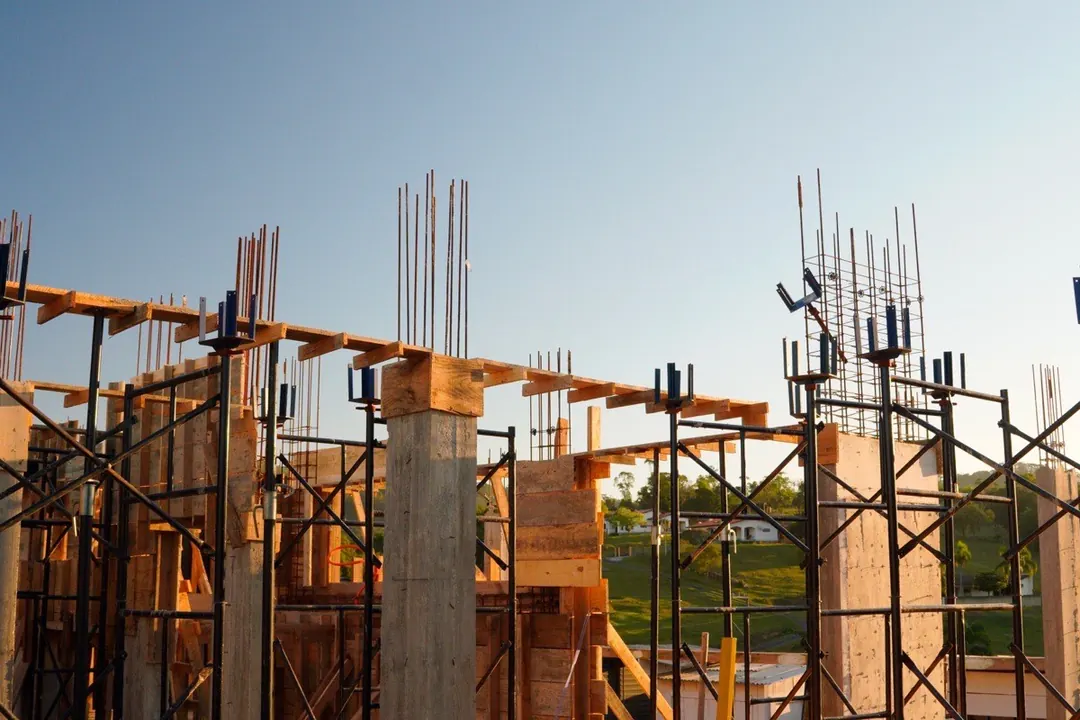
What delays a project is almost never bad luck. In more than 35 years building in Criciúma and the surrounding region, we have seen the same culprits repeat themselves: scope changes midway, materials that don't arrive on time, rain with no plan B, and a design that started out too open-ended. The good news is that they all have an antidote. In this article we show how each of these problems arises and what planning does to keep the schedule on track. If you want to understand total timelines, it's also worth reading how long it takes to build a house.
What delays a project most: scope change
Changing the cladding after the wall is finished. Enlarging the balcony once the structure has already been cast. Deciding, with the project underway, that the kitchen will move somewhere else. Each of these changes sounds small in conversation, but it unravels the sequence of tasks that had been tied together.
A change of scope rarely costs only the new work. It cancels material orders that had already been placed, halts a work front and forces redoing what was already right. The delay doesn't come from the change itself, it comes from the domino effect it creates in the rest of the schedule.
That is why we insist so much on deciding before building. The more choices the client settles during the design phase, the less temptation there is to change things once the project is underway. And when a change is unavoidable, the way to handle it is to replan the schedule clearly, not to muddle through.
An open-ended design is an invitation to rework
Starting construction without a finalized design is one of the most expensive decisions there is, even if it doesn't seem so at first. Without a complete design, decisions get made on site, under pressure, and every unresolved point turns into a stoppage. The team waits for an answer, the supplier waits for a measurement, the schedule waits for everyone.
Here at EZA we work with design coordination before executing: architectural, structural, plumbing and electrical checked together, so that conflicts show up on paper, not on the wall. The client also views the house in VR, which helps to anticipate decisions and move forward with more confidence.
If you are just starting out, it is worth getting to know the stages of building a high-end house to understand why the design phase deserves patience.
Material that doesn't arrive on the date
Some materials have a long manufacturing lead time: made-to-measure window and door frames, special cladding, stone, cabinetry. Those who buy at the moment the work is about to start find out that delivery takes weeks, and the team is left staring at the wall.
The defense is simple to state and laborious to carry out: map on the schedule the date when each material needs to be on site and trigger purchases with room to spare. Supply is planned backwards, from the date of use to the date of the order.
A long-term relationship with a supplier also counts. A supplier who knows the construction company gives advance notice when a deadline is going to get tight, and that gives time to react without halting the project.
- Made-to-measure frames and glazing
- Finishes and finishing stones
- Custom cabinetry and items with long fabrication times
Rain is not a surprise, it is a planning input
It rains every year in the south of Santa Catarina. A project that stops every time it rains was not planned, it was improvised. A well-made schedule already accounts for days lost to weather and organizes the work fronts so there is always work available in a covered area.
In practice, this means sequencing the project with a plan B: if the façade can't move forward, the team shifts to internal installations, subfloor, ceiling. It's the kind of adjustment we make in the alignment meetings on-site, where the schedule is reviewed and the work fronts are assessed.
A good schedule is a monitored schedule
A schedule is not a contract ornament. It only works when someone compares, every week, the planned against the actual and corrects course early, while the deviation is still small. A big delay is almost always a small delay that no one faced up to in time.
This is where in-house engineering makes a difference: those who plan and those who execute are the same team, so decisions come out fast and replanning actually happens. We usually sum it up like this: an organized project does not depend on luck. It depends on planning.
And it's worth making clear: rushing isn't the goal. In the end, it's not about doing it faster. It's about doing it well, within the agreed timeframe. For those who want to go deeper, we explain how the high-end project management.
Project delay is not fate, it's a symptom. When the design is finalized, purchases go out at the right time, the weather has a plan B and the schedule is closely monitored, the project moves at the agreed pace. This is how EZA Engenharia has worked since 1991 in Criciúma and the region. If you are planning to build and want a schedule that is met, reach out to us on WhatsApp (48) 99191-2018, write to [email protected] or explore our projects at eza.com.br.
Frequently asked questions
What are the main causes of delay in a project?
Scope changes in the middle of execution, an incomplete design, material that does not arrive on time and weather without a contingency plan. Almost all of them stem from a postponed decision or weak planning. That is why the design phase and the detailed schedule are the best prevention.
Does rain justify a delay in the project?
Some days of heavy rain do halt outdoor work, that is real. But rain is predictable in the region and a good schedule already sets aside a margin for it, besides keeping work fronts going in covered areas. When rain becomes a recurring excuse, the problem is usually the planning, not the weather.
Does changing the design during construction always cause delays?
It almost always has some impact, because the change dismantles the sequence of tasks and the material orders already placed. The size of the delay depends on the stage: changing finishes early is manageable, altering a finished structure is expensive and slow. The ideal is to lock in decisions during the design phase, when changing is still just erasing and drawing again.
Want to build your high-end house in Criciúma?
EZA Engenharia takes care of your project from start to handover, since 1991.
Chat on WhatsApp Request a quote