
How to speed up the project without losing quality (and what never to shorten)
What really speeds up a project: planning, design coordination, early purchasing, and making decisions at the right time. And what you should never cut short: the curing of the concrete.
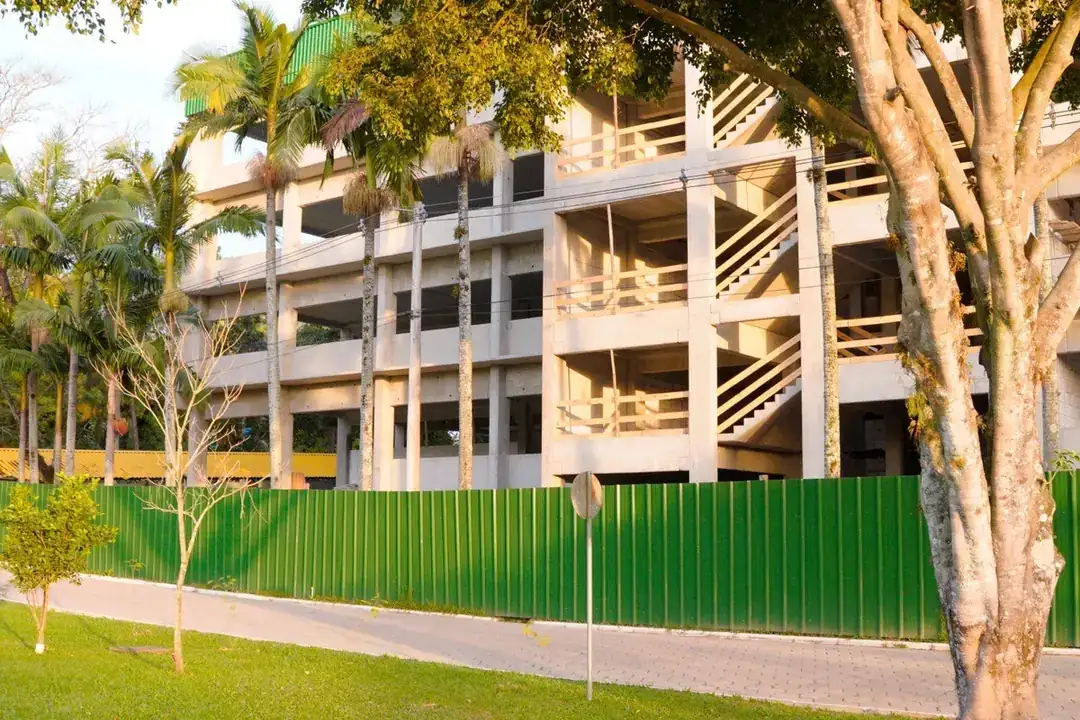
You can speed up the project without losing quality, but the way to do it is not to pressure the team or skip stages. What truly shortens timelines comes before and during execution: well-done planning, coordinated designs, early purchase of materials and decisions made at the right time. After more than 35 years on the job site in Criciúma and the region, we have learned that a late project is almost never late for lack of hurry. It is late for lack of organization. In this text we show what works, what is a myth and, if you want to understand typical timelines, see also how long it takes to build a house.
What really speeds up the project
An organized project does not depend on luck. It depends on planning. This phrase circulates in our posts because it sums up more than three decades on the job site. A realistic schedule, a well-thought-out sequence of tasks and suppliers defined early make the project move along without a rush.
In practice, the time invested on paper comes back multiplied on the worksite. When the team knows what will happen three weeks from now, it prepares the service front, orders material in advance and nobody stands idle waiting for a decision. A stopped project costs dearly. And the lost day doesn't come back on the calendar.
Coordinating the designs eliminates the biggest thief of time
Rework is what steals the most time on a project. Breaking a finished wall to run a pipe that wasn't planned, redoing a ceiling because the light fixture hit a beam, waiting for the designer to resolve a conflict no one saw on paper. Each of these episodes stops an entire team.
Coordinating designs means cross-checking the architectural, structural, plumbing and electrical plans before starting, so that conflicts show up on the screen and not on the wall. EZA works with design coordination precisely for this reason: a problem solved on the computer costs hours, and the same problem discovered on site costs weeks. It is one of the foundations of a good project management.
Advance purchasing and teams in parallel
There are materials you cannot buy the week you need them. Made-to-measure frames, natural stone, imported fixtures and sanitaryware, special-line surfaces, all of these have factory lead times that do not obey your schedule. Buying ahead, guided by planning, ensures the material arrives before the team needs it.
Another real lever is working with service fronts in parallel. While one team finishes the masonry of a section, another is already carrying out the installations of the previous section. This requires fine coordination, otherwise the teams get in each other's way. On the project for SATC's new university block, in Criciúma, with more than 4,500 m² of precast structure and tight deadlines, it's this organization of fronts that our team aligns in meetings within the site itself.
The choice of building system also matters. Precast, for example, shortens the structural stage because the parts arrive ready from the factory. And in 2026 we trained the team on a new shoring system using scaffolding with cups, aiming for greater precision and productivity without giving up safety.
- Made-to-measure frames and special glass
- Natural stones and premium-line finishes
- Fixtures, faucets and imported items
A decision made at the right time
Few things delay a project more than a pending decision. The finish the client has not yet chosen holds up the purchase order, which holds up the installation, which holds up the joinery that comes afterward. The rush shows up at the end precisely because the decision did not come at the beginning.
That is why we anticipate the choices with the client. With coordinated designs and VR visualization, the client understands every detail better, makes decisions ahead of time and moves forward with more confidence. Deciding early, seeing the project almost as it will turn out, avoids changes of mind in the middle of execution, which is where they cost the most.
What never to shorten: stages and curing of the concrete
There is a difference between speeding up and rushing through. Skipping a stage is rushing through. The construction stages follow an order for a technical reason: foundation before structure, waterproofing before cladding, installation tested before closing the wall.
Curing the concrete is the classic example. After pouring, concrete needs moisture and time to gain strength, and the usual technical reference is the strength measured at 28 days. Stripping the formwork too early or loading the structure before it's ready saves days on paper and charges you back in cracks later. There are concretes and additives that accelerate this gain, but that's an engineering decision, not a matter of haste. On our projects, the pour is supervised by an engineer.
The same goes for the watertightness test, which we do on EZA's projects: seal everything, wait, monitor. It takes time, but it ensures the waterproofing is actually working. Cutting this kind of verification to gain a week is trading schedule for a headache.
In the end, it's not about doing it faster. It's about doing it well. That phrase is ours and sums up the company's philosophy: real speed is born from organization, and organization doesn't appear at the last minute. If you're planning to build in Criciúma and the region and want a project that moves along without scares, reach out to EZA on WhatsApp (48) 99191-2018, send an e-mail to [email protected] or get to know our projects at eza.com.br. We'll show you how your project's schedule can be fast the right way.
Frequently asked questions
Can the schedule of a delayed project be recovered?
It's possible, but almost never by forcing the execution through brute effort. The way to go is to replan: reorganize the sequence of tasks, open parallel fronts where it is safe and unblock the decisions and purchases that are holding up the job site. Adding more people without coordination usually makes things worse, because the teams get in each other's way.
How long does concrete curing take?
Concrete gains strength over the course of weeks, and the usual technical reference is the strength measured at 28 days. This does not mean the project is halted for a month: the schedule plans what can advance in parallel while the structure cures. What you cannot do is load the structure before the deadline defined by the engineer.
Does hiring more bricklayers make the project move faster?
Only up to a point. Each work front holds a limited number of professionals working well, and too many people in the same space creates waiting, rework, and accident risk. The real gain comes from opening fronts in parallel with coordination, not from packing the job site.
Want to build your high-end house in Criciúma?
EZA Engenharia takes care of your project from start to handover, since 1991.
Chat on WhatsApp Request a quote